A note in 5 layers
Acrylic mediums: matte, gloss, and what they do to colour
Acrylic medium is not a thinner. It is a second pigment with no colour, and its sheen decides how much light comes back out of the film. That is why the same tube of burnt sienna looks like two different colours in a matte and a gloss mix.
- Section
- Medium
- Support
- Acrylic
- Drying
- 20–40 分钟表干,24 小时干透
- Published
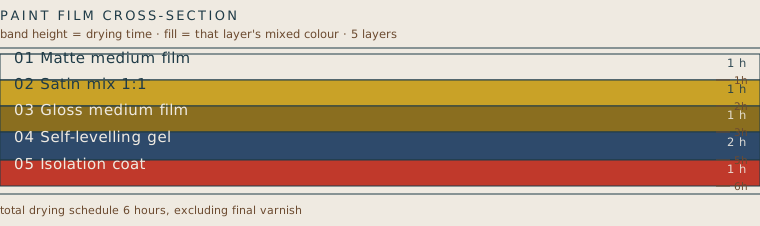
Sheen is a value decision
A matte film scatters light at the surface; a gloss film transmits it into the layer and lets it bounce off the pigment. In practice a burnt sienna mixed 1:1 with matte medium dries about one value step lighter than the same pigment mixed 1:1 with gloss.
This matters most in darks. Paint every shadow in gloss and every light in matte and the picture will read as though lit from within the shadows — which is a legitimate effect, but a distracting one if it happens by accident.
Water is a third variable
Water beyond about thirty percent of the mix reduces the binder available per unit of pigment and the film dries powdery and under-bound. It may also lift later. If you want a wash, use fluid medium or a dedicated glazing liquid rather than thinning with water alone.
For flat, streak-free fields, wet the area with a thin coat of matte medium first and paint into it. This is the acrylic equivalent of oil painting's wet-into-wet, but with an open time measured in minutes rather than hours.
Building a layered acrylic picture
Fast drying makes layering easier than in oil only if you use it deliberately. Work in one session, then seal the whole surface with a gloss once it is through-dry — about 24 hours for a normal film, longer in a humid room.
The is what lets you glaze over a soft passage without disturbing it. Without it, the next pass will rewet and lift the layer below, and you will spend the rest of the painting repairing edges.
Sheen against dilution
| Mix | Sheen | Value shift on drying | Water tolerance |
|---|---|---|---|
| Colour + water only | Matte | +2 steps | low |
| Colour + matte medium | Flat | +1 step | medium |
| Colour + satin 1:1 | Mid | +0.5 step | medium |
| Colour + gloss medium | Glossy | −1 step | high |
| Colour + self-levelling gel | Glossy, textured | −1 step | n/a |
Layer schedule
| # | Layer | Technique | Mix | Dry |
|---|---|---|---|---|
| 1 | Matte medium film | Flat, slightly chalky, lifts colour value | #EFEAE1 | 1 h |
| 2 | Satin mix 1:1 | Half matte, half gloss — mid sheen | #C9A227 | 1 h |
| 3 | Gloss medium film | Wet-looking, deepens darks by ~1 step | #8A6E1F | 1 h |
| 4 | Self-levelling gel | Keeps brush marks, holds 2 mm peaks | #2E4A6B | 2 h |
| 5 | Isolation coat | Gloss medium, dries clear, seals a layer | #C0392B | 1 h |
Questions that come up
- Why does my painting look chalky after it dries?
- Two causes: too much water in the mix, or a matte medium used at full strength in the final layers. Matte medium contains silica or similar flattening agents that scatter light and raise apparent value. Finish with a thin gloss or satin layer to restore depth.
- Does gloss medium make colours more transparent?
- Yes, and that is the useful part. Mixed with gloss medium, a heavy-body colour behaves like a glaze and lets a lower layer read through. Matte medium does the opposite: it holds the layer opaque.
Materials and safety note
Drying times assume a ventilated studio at 20 °C and 50 % relative humidity; cold or damp conditions extend them substantially. Solvents and metal-bearing pigments (lead white, cadmiums, cobalts) belong in a ventilated space, out of prolonged skin contact, and lead-bearing paint does not belong on anything a child handles. This page is craft information, not materials-safety, health or conservation advice.